Car Key Programming Explained: Arlington TX Guide (2026)
Car key programming in Arlington TX explained: transponder chips, smart keys, immobilizers, all-keys-lost, and 2026 prices. Call (682) 413-8193.
The short answer on car key programming in Arlington
As of July 2026, most cars built after the late 1990s will not start unless a tiny chip inside the key is electronically recognized by the vehicle — and that recognition is exactly what "programming" creates. Arlington Auto Locksmith is a mobile, 24/7 service that programs transponder keys and proximity smart keys on-site, typically in the $120–$450 range depending on your vehicle and key type. A basic transponder key usually runs $120–$220, while a push-to-start proximity smart key generally lands between $230 and $450. If you're locked into the "why won't my new key start the car?" puzzle, this guide explains what's happening under the hood — and you can always skip straight to a technician at (682) 413-8193.
The word "programming" sounds abstract, but the mechanics are concrete. There's a chip, a computer in your car, an encrypted conversation between them, and a tool that lets a qualified locksmith join that conversation. Once you understand those four pieces, the pricing and the timeline both make a lot more sense.
What does car key programming actually do?
Cutting a key and programming a key are two completely separate jobs. Cutting shapes the metal blade so it fits the physical lock and turns the ignition cylinder. Programming teaches your car's computer to accept the electronic identity stored inside that key. A key can be cut perfectly and still fail to start the engine, because the immobilizer — the anti-theft brain — hasn't been told to trust it.
Here's the sequence that happens every time you start a modern car. You turn the key or press the start button. An antenna ring around the ignition or in the dash energizes a small chip in your key. That chip wakes up and transmits a unique code. The immobilizer control module compares that code against the list of authorized keys stored in its memory. If it matches, the module tells the engine computer to release fuel and spark. If it doesn't match, the engine cranks but never fires — or won't crank at all.
Programming, then, is the act of adding your key's code to that trusted list (or, in some cases, generating a brand-new list). The National Highway Traffic Safety Administration has documented how electronic immobilizers sharply reduced vehicle theft after they became common, which is precisely why the process is deliberately locked down and can't be done with an ordinary hardware-store copy.
Transponder vs smart key — what's the difference?
People use "chip key," "fob," and "smart key" interchangeably, but the engineering differs in ways that directly affect cost and procedure. Understanding which one you have is the fastest way to know what to expect.
A transponder key is a physical blade with a passive chip molded into the plastic head. It has no battery — the chip draws power from the antenna ring only when it's near the ignition. You still insert it and turn it. Many vehicles from roughly 1998 through the late 2010s use this style, sometimes with a separate remote for the door locks.
A proximity smart key (also called a push-to-start fob) contains an active, battery-powered transmitter. The car detects it inside the cabin, lets you start with a button, and often unlocks the doors as you approach. Because these fobs carry more electronics and use rolling-code encryption that changes with every use, they cost more to buy and take longer to program.
| Key type | How you start | Battery in key | Typical 2026 DFW mobile price |
|---|---|---|---|
| Basic transponder key | Insert and turn | No | $120–$220 |
| Remote head key (flip/combo) | Insert and turn | Yes (remote only) | $160–$300 |
| Proximity smart key / fob | Push-button start | Yes | $230–$450 |
| All-keys-lost (any type) | Varies | Varies | Higher — quote on-site |
Rolling-code encryption is worth a sentence of its own. Instead of sending the same signal every time, the remote and the car both advance through a synchronized sequence of codes, so a captured signal can't simply be replayed. If you want a deeper side-by-side, our guide on transponder vs smart keys breaks down the trade-offs, and you can book either service through transponder key programming or smart key programming.
How does a locksmith actually program a key?
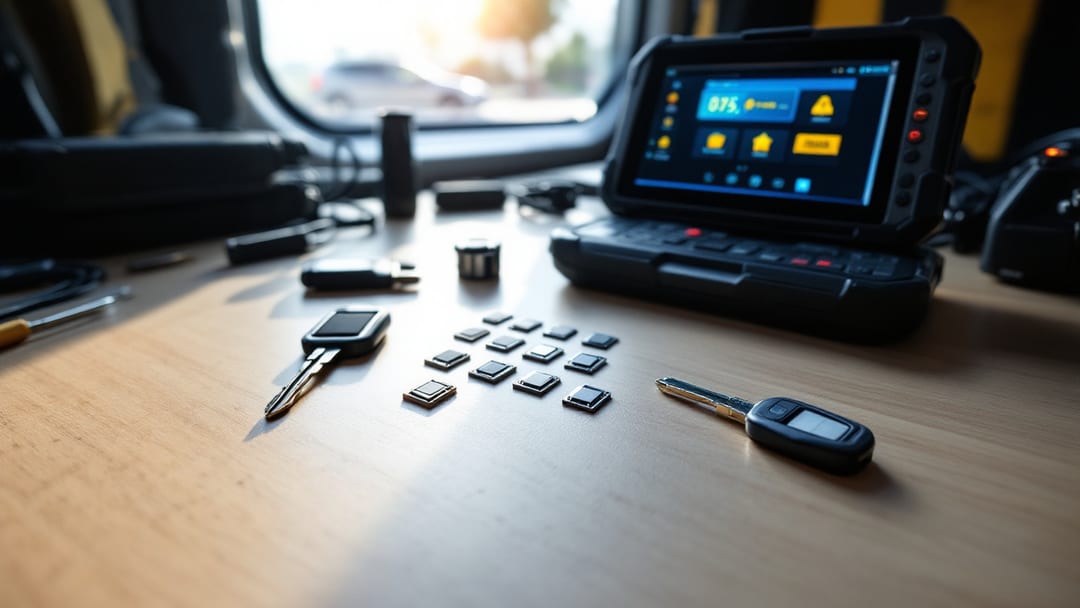
For most vehicles, programming happens through the OBD-II port — a standardized diagnostic connector usually tucked under the driver's-side dashboard. A locksmith plugs a specialized programming tool into that port, and the tool speaks directly to the immobilizer module. The technician selects your make, model, and year, follows the on-screen procedure, and the module writes the new key's code into memory.
Some vehicles add a security layer. To authorize a new key, the tool may need a PIN or "seed" code — a manufacturer-specific value tied to your VIN. Qualified locksmiths retrieve these codes through legitimate channels rather than guessing. The National Automotive Service Task Force exists in part to give locksmiths a lawful, verified path to that data, and it describes its role as connecting the industry to secure vehicle security information that keeps repairs above board.
"The Secure Data Release Model provides locksmiths and independent repairers a secure and verifiable means of gaining access to vehicle security information." — National Automotive Service Task Force
The takeaway: reputable programming is a documented, traceable process — not a workaround. That's the standard you should expect from anyone touching your vehicle's anti-theft system.
What is all-keys-lost programming?
This is the single biggest driver of price and time, so it's worth understanding clearly.
Add-a-key programming happens when you still have at least one working key. The car already trusts an existing key, which gives the programming tool an easier path to add another. This is the common, faster, cheaper scenario — a spare, a backup, or a replacement for one lost fob while another still works.
All-keys-lost programming happens when no working key exists — every original is gone, or you bought a used car with only one key that then broke. Now the tool has to establish trust from scratch, sometimes erasing the old key list entirely so no lost key can still start your car. That extra work, and the security codes it often requires, is why all-keys-lost jobs cost more and take longer. On some vehicles a locksmith must also cut a fresh key by code or by decoding the door lock before any programming can begin. If you've lost everything, car key replacement covers cutting and programming together, and emergency locksmith service can dispatch quickly when you're stranded.
Why do newer cars have a Security Gateway module?
If your vehicle is a recent model year, there may be one more layer: a Security Gateway module (sometimes called a SGW or gateway). Manufacturers added these to shield the internal vehicle network from unauthorized devices plugged into the OBD-II port — a genuine cybersecurity improvement. The practical effect is that a locksmith or shop must authenticate through the gateway before the immobilizer will accept any programming commands.
This is a good thing for owners: it raises the bar against theft and tampering. It also means the DIY gadgets sold online increasingly can't touch these vehicles, and that a properly equipped mobile locksmith needs current tooling and legitimate credentials to get the job done. When you're researching key work, the Federal Trade Commission's guidance on choosing a repair provider is a useful reminder to confirm capability up front rather than after a truck rolls out.
Locksmith vs dealer: what's the real difference?
Dealerships can absolutely program keys, but for many owners a mobile locksmith is faster and less expensive. Here's an honest comparison.
| Factor | Mobile locksmith | Dealership |
|---|---|---|
| Location | Comes to you | You drive or tow in |
| Availability | Often 24/7 | Business hours |
| Typical wait | Same day, sometimes within the hour | Appointment, possible tow |
| Key/fob source | OEM or quality aftermarket | OEM only |
| Cost | Usually lower | Often higher |
A dealer makes sense when a vehicle is brand-new, still under a program that covers keys, or so recent that only the manufacturer has tooling. For the large middle of the market — most cars on the road in Tarrant County — a mobile locksmith handles the same immobilizer programming without the tow bill. Consumer resources like Consumer Reports on car-key replacement costs consistently note that dealer pricing skews high, which is exactly the gap independent locksmiths fill.
A typical Arlington scenario
Picture a driver leaving a Saturday event at AT&T Stadium. They walk to the lot off Randol Mill, press the fob, and — nothing. The fob is dead or the only spare snapped weeks ago and was never replaced. With traffic still pouring off Highway 360 and I-30, a tow to a dealer means a long wait and a closed service department.
Instead, the owner calls a mobile locksmith. A technician drives out, confirms the vehicle is a push-to-start model, retrieves the security code tied to the VIN, cuts a fresh emergency blade for the door, and programs a new proximity fob at the curb. Within the hour, the driver is heading home past Globe Life Field instead of waiting on a flatbed. Whether you're near UTA, The Parks Mall, or over toward Six Flags, on-site programming turns a ruined evening into a short delay. Same-day help across the area is what car key duplication and transponder key programming near you are built for.
We serve drivers throughout the metro, including Arlington and neighboring Grand Prairie.
How long does programming take, and can it damage my car?
Programming is non-destructive when done correctly. The tool communicates over the same diagnostic bus your mechanic uses for routine service — it reads and writes to the immobilizer, nothing more. An add-a-key job on a common vehicle can take just a few minutes once the key is cut. All-keys-lost work, gateway authentication, or code retrieval can stretch a visit to 30–60 minutes or more. If you ever also need mechanical work like ignition repair, that's a separate service from programming, though the two sometimes travel together on older vehicles.
Frequently Asked Questions
How much does car key programming cost in Arlington in 2026?
Expect roughly $120–$220 for a standard transponder key and $230–$450 for a proximity smart key in the DFW area. All-keys-lost jobs cost more because they require extra security steps and sometimes fresh key cutting. Your exact price depends on make, model, and year, so a quick call for a quote is the most accurate way to plan.
Can I program a car key myself at home?
Some older vehicles allow a basic on-board procedure with two working keys, but most modern cars require a programming tool that connects to the OBD-II port, and many now need PIN or seed codes and Security Gateway authentication. For all-keys-lost situations or newer vehicles, DIY generally isn't possible, and a mistake can lock out the immobilizer.
What's the difference between add-a-key and all-keys-lost programming?
Add-a-key programming means you still have at least one working key, which lets the tool add another quickly and affordably. All-keys-lost means no key works at all, so the system has to build trust from scratch — often erasing old keys and requiring security codes. That extra work makes all-keys-lost jobs take longer and cost more.
Will a new programmed key stop my old lost key from working?
It can, and often that's the goal for security. During all-keys-lost programming or a full immobilizer reset, the technician can wipe the existing key list so any previously lost key no longer starts the car. If you simply add a spare, your original keys typically keep working alongside the new one.
Does my car need a Security Gateway bypass to program a key?
Many recent model years include a Security Gateway module that protects the vehicle network, and a locksmith must authenticate through it before programming. This isn't a "bypass" in a shady sense — it's legitimate, credentialed access using current tooling. It's one reason cheap online gadgets increasingly fail on newer vehicles.
Is mobile car key programming as reliable as the dealership?
Yes, for the vast majority of vehicles on the road. A properly equipped mobile locksmith uses the same immobilizer programming approach through the diagnostic port, with OEM or quality aftermarket keys. Dealers remain the right call for brand-new models where only the manufacturer has tooling, but for most cars mobile service is faster and usually cheaper.
Get your key programmed today
If you're stranded, down to your last key, or just want a spare before something goes wrong, don't wait for a chip failure at the worst possible moment. Arlington Auto Locksmith is mobile, 24/7, and licensed, insured, and bonded — we come to you anywhere across Arlington and the surrounding metro. Call or text (682) 413-8193, reach us at (682) 413-8193, or message us on WhatsApp at wa.me/16824138193 to get a technician rolling. You can also contact us here to schedule ahead.
Prepared by the Arlington Auto Locksmith team.